OFAC Sanctions Programs Explained for Nonprofits
A plain-English guide to OFAC sanctions programs: how they work, legal risks, how to screen volunteers, and how to handle potential matches with confidence.
On this page
A volunteer coordinator at a church runs a routine background check before approving a new youth-program helper. The report flags a name that resembles an entry on an OFAC sanctions list. The coordinator has never handled an international payment, the applicant has a common name, and nobody wants to reject a volunteer based on a database alert that may belong to someone else.
That situation is manageable when the organization treats screening as a documented decision process, not as a yes-or-no button. OFAC sanctions programs can affect donations, vendors, overseas partners, payment routes, and people connected to a nonprofit, even when the organization's mission is humanitarian or entirely local.
Table of Contents
- What OFAC Sanctions Programs Mean for Your Organization
- How OFAC Sanctions Programs Are Organized
- The Legal Implications of an OFAC Match
- Why Modern Sanctions Programs Reach Further Than You Expect
- How to Screen Against OFAC Sanctions Programs
- Handling a Potential Match Without Panic
- Putting It Together With VolunteerBadge Screening
What OFAC Sanctions Programs Mean for Your Organization
The first mistake is treating an OFAC alert as a verdict. A list result is a signal that someone needs to investigate the identity, the relevant program, and the proposed activity.
The Office of Foreign Assets Control, or OFAC, administers and enforces U.S. economic sanctions. A sanctions program is a set of restrictions directed at a country, government, individual, entity, activity, or sector. Some restrictions concern where an organization operates. Others target terrorism, narcotics trafficking, proliferation, cyber activity, or other national-security threats.
That's why OFAC isn't one universal “banned people” list. It's closer to a collection of rulebooks. The same name may appear in a screening result, but the legal meaning depends on the person's identifiers, the designation authority, the program involved, and the transaction your organization is considering.
Practical rule: A name match starts an identity review. It doesn't finish one.
OFAC's history helps explain this structure. The Treasury Department's Office of Foreign Funds Control was established in 1940 after Germany invaded Norway. During World War II, it blocked enemy assets and restricted foreign trade and financial transactions. After China entered the Korean War, President Harry S. Truman declared a national emergency in December 1950, and the Division of Foreign Assets Control, OFAC's immediate predecessor, was created. The office formally became OFAC on October 15, 1962. Its authorities now cover country-based programs as well as terrorism, narcotics trafficking, proliferation, cyber activity, and other threats, as described in OFAC's historical overview.
For a nonprofit, the practical lesson is simple. Don't ask only, “Is this person on the OFAC list?” Ask instead:
- Who is this person or organization?
- Which sanctions program produced the result?
- What activity are we about to permit?
- Does a restriction, exemption, or license apply?
- What evidence supports our decision?
A plain-language guide to the OFAC sanctions country list can help coordinators understand the geographic side, but country names alone won't resolve every alert. A local volunteer, foreign partner, donor, contractor, or bank may require different review depending on the facts.
How OFAC Sanctions Programs Are Organized
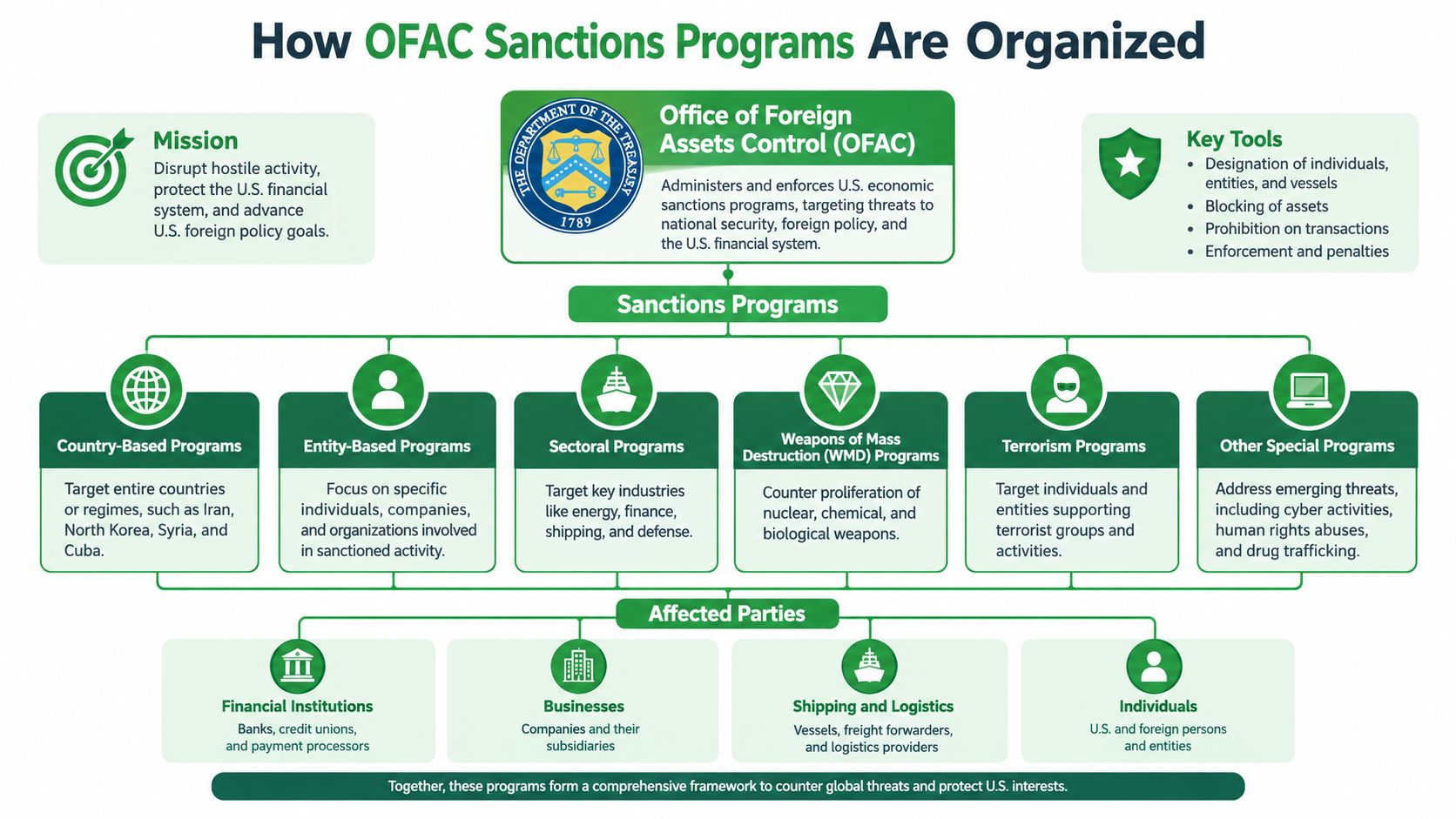
Think of OFAC sanctions programs as a library of rulebooks, not a single do-not-call list. Each rulebook has its own scope, definitions, prohibited conduct, and possible authorizations. Screening software may point to a name, but the program rules determine what the result means.
Country-based programs
Some programs focus on a country or territory. A country-based program may impose broad restrictions, or it may target particular officials, institutions, industries, or activities connected with that country. The program name therefore isn't enough to tell you whether every proposed transaction is prohibited.
For example, a nonprofit considering aid-related payments shouldn't stop at the statement, “The project is humanitarian.” Staff need to identify the country, the relevant program, the parties involved, the bank or payment platform, the goods or services, and any available authorization. A humanitarian purpose can matter, but it doesn't automatically erase sanctions risk.
List-based designations
The Specially Designated Nationals and Blocked Persons List, commonly called the SDN List, identifies individuals and entities whose property and interests in property are generally blocked under applicable sanctions authorities. It can also include aliases and identifying information used to distinguish one party from another.
A potential SDN result is important, but a similar name isn't conclusive. The reviewer should compare available identifiers, such as date of birth, nationality, address, aliases, and entity information. A volunteer with the same name as a listed person may be completely unrelated.
Other OFAC lists can carry different consequences. An organization shouldn't assume that every list entry creates the same restriction or that every list is interpreted in the same way. The relevant program and designation authority control the analysis.
Sectoral and activity-based measures
Some sanctions apply to qualifying persons or entities in specified industries or activities. These measures may restrict particular types of financing, investment, or dealings rather than prohibit every interaction with the named party.
That distinction matters for nonprofits working through partners. A contractor, bank, shipping company, technology provider, or donor may create a separate screening question even when the underlying project is charitable. The organization needs a control that follows the transaction chain, not just the volunteer's name.
A useful hierarchy
Use this sequence when reading an alert:
- Identify the subject. Is it an individual, organization, vessel, aircraft, bank, or another party?
- Identify the program. Which sanctions authority and program produced the result?
- Identify the activity. Is the organization onboarding, paying, receiving funds, contracting, traveling, or providing services?
- Check the authorization. Does an exemption or general license cover the exact activity, or might a specific license be needed?
- Record the decision. Preserve the identifiers reviewed, the conclusion, and the person who approved it.
That approach prevents a geographic match from becoming an automatic rejection and prevents a vague humanitarian rationale from becoming an unsupported approval.
The Legal Implications of an OFAC Match
OFAC compliance is operational because sanctions violations can carry civil liability under a strict-liability standard. A person subject to U.S. jurisdiction may face civil liability even without knowing that a prohibited transaction occurred, as explained in OFAC's FAQ on strict liability and reporting.
For a nonprofit, jurisdiction can arise through the organization itself, its U.S. bank, a U.S. payment route, or a person covered by U.S. sanctions rules. U.S. persons include U.S. citizens and permanent residents wherever they're located, U.S. entities, and foreign branches of U.S. companies.
That doesn't mean every alert is a violation. It means the organization needs a reasonable control for identifying, pausing, investigating, and resolving potential exposure.
Blocking and rejecting aren't the same
A blocked transaction involves property or an interest in property that must be frozen rather than allowed to move. A rejected transaction is refused because processing it would be prohibited, even when there's no property that must be blocked.
The distinction belongs with the organization's compliance lead, bank, or qualified counsel when the facts are uncertain. Volunteer coordinators shouldn't improvise a legal conclusion from a name-only result.
If property is blocked or a transaction is rejected because of sanctions, OFAC states that the action must generally be reported within 10 business days, and blocked property is also subject to annual reporting. The organization should establish an escalation path before an alert occurs, including who contacts the bank, who preserves records, and who decides whether outside advice is needed.
A documented process also fits the broader discipline described in financial services compliance explained, where controls connect policy, review, evidence, and action instead of treating compliance as a one-time check.
What a small organization should preserve
Keep the search result, the date of the search, the data used for comparison, relevant correspondence, the disposition, and the approving person. If the organization decides the alert is unrelated, write down why. If the organization pauses onboarding or payment, record the reason and next step.
The OFAC penalties for noncompliance can be serious, but fear isn't a substitute for governance. A calm escalation procedure gives a church, charity, or school a way to show that it responded thoughtfully rather than ignoring a warning.
Why Modern Sanctions Programs Reach Further Than You Expect
A nonprofit may think OFAC matters only to banks, exporters, or international corporations. Modern sanctions programs make that assumption unsafe. The exposure can enter through a foreign partner, a contractor, a payment processor, a shipping provider, or a bank that handles a donation.
Russia-related measures after the full-scale invasion of Ukraine show the scale. In the first year after the invasion, OFAC added more than 2,500 Russia-related targets to the SDN List. The additions included roughly 2,400 individuals and entities, 115 vessels, and 19 aircraft, according to the U.S. Treasury fact sheet on Russia-related sanctions.
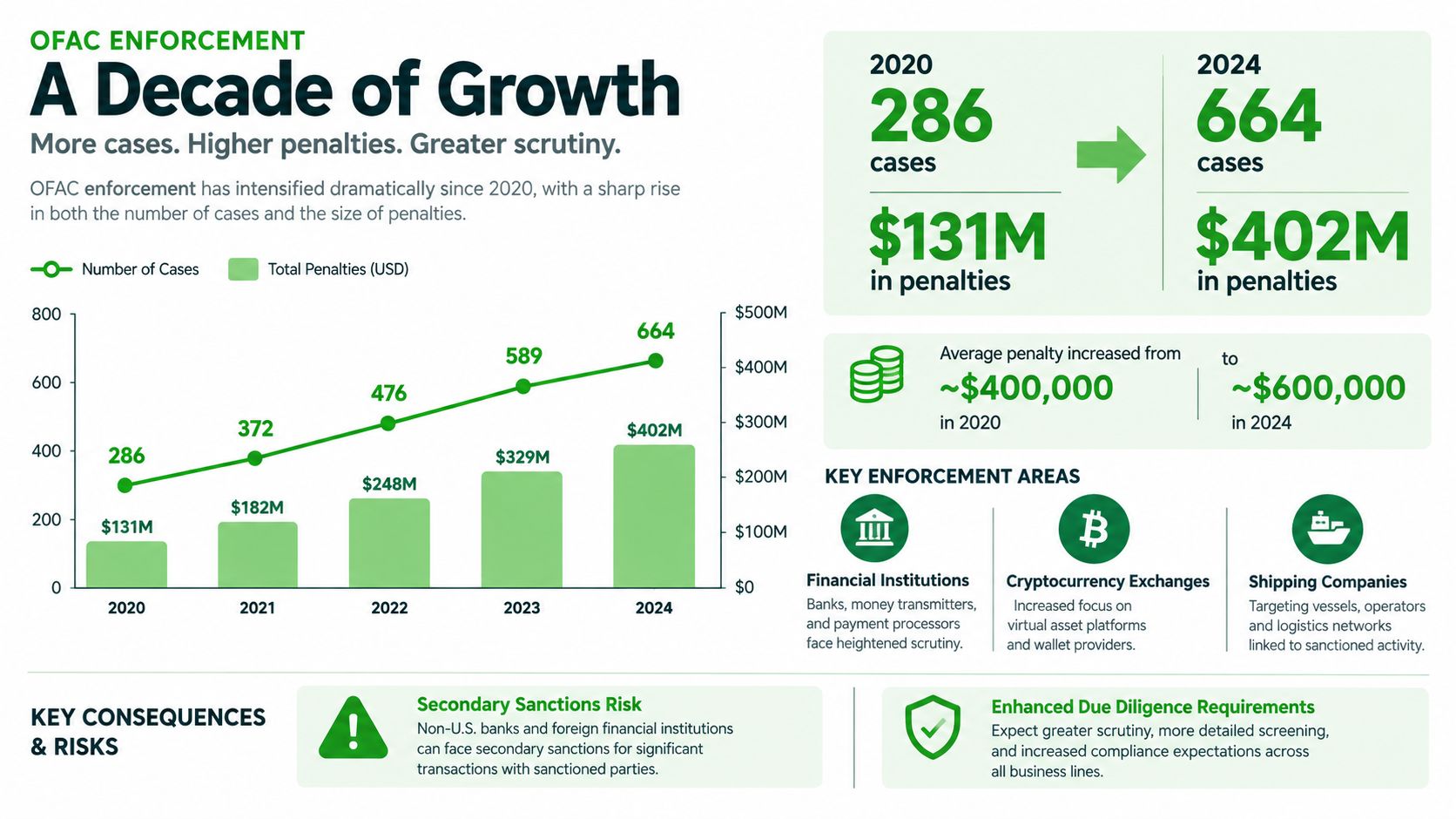
Treasury also stated that U.S. sanctions covered more than 80% of Russia's banking sector by assets, including the country's 10 largest Russian-owned banks. More than 600 listed targets were connected to Russia's military-industrial complex, while more than 200 additional targets associated with sanctions evasion were spread across Europe, Africa, and Asia.
The point isn't that a neighborhood youth league suddenly needs a bank-sized compliance department. The point is that sanctions exposure doesn't stop at the named individual your organization knows. It can involve an institution, vessel, aircraft, supplier, facilitator, or financial channel connected to a seemingly ordinary payment.
A local example with an international edge
Suppose a church funds food distribution through a local nonprofit partner abroad. The church may never send money directly to a sanctioned person. The transfer might pass through a bank, a local contractor may purchase supplies, and a digital platform may process the donation.
Each participant creates a separate question:
- Is the partner properly identified?
- Is the receiving bank permitted to handle the funds?
- Is the contractor owned or controlled by a designated party?
- Does the payment route touch a restricted jurisdiction?
- Does a general license cover the specific activity?
Humanitarian intent is relevant, but authorization depends on the exact activity, parties, property, payment route, and license conditions.
OFAC distinguishes between exemptions, general licenses, and specific licenses. A general license is self-executing only when every stated condition is met. A specific license requires case-by-case approval. Activities outside an applicable authorization may require a specific-license request, so “we're helping people” should trigger careful documentation, not an automatic green light.
How to Screen Against OFAC Sanctions Programs
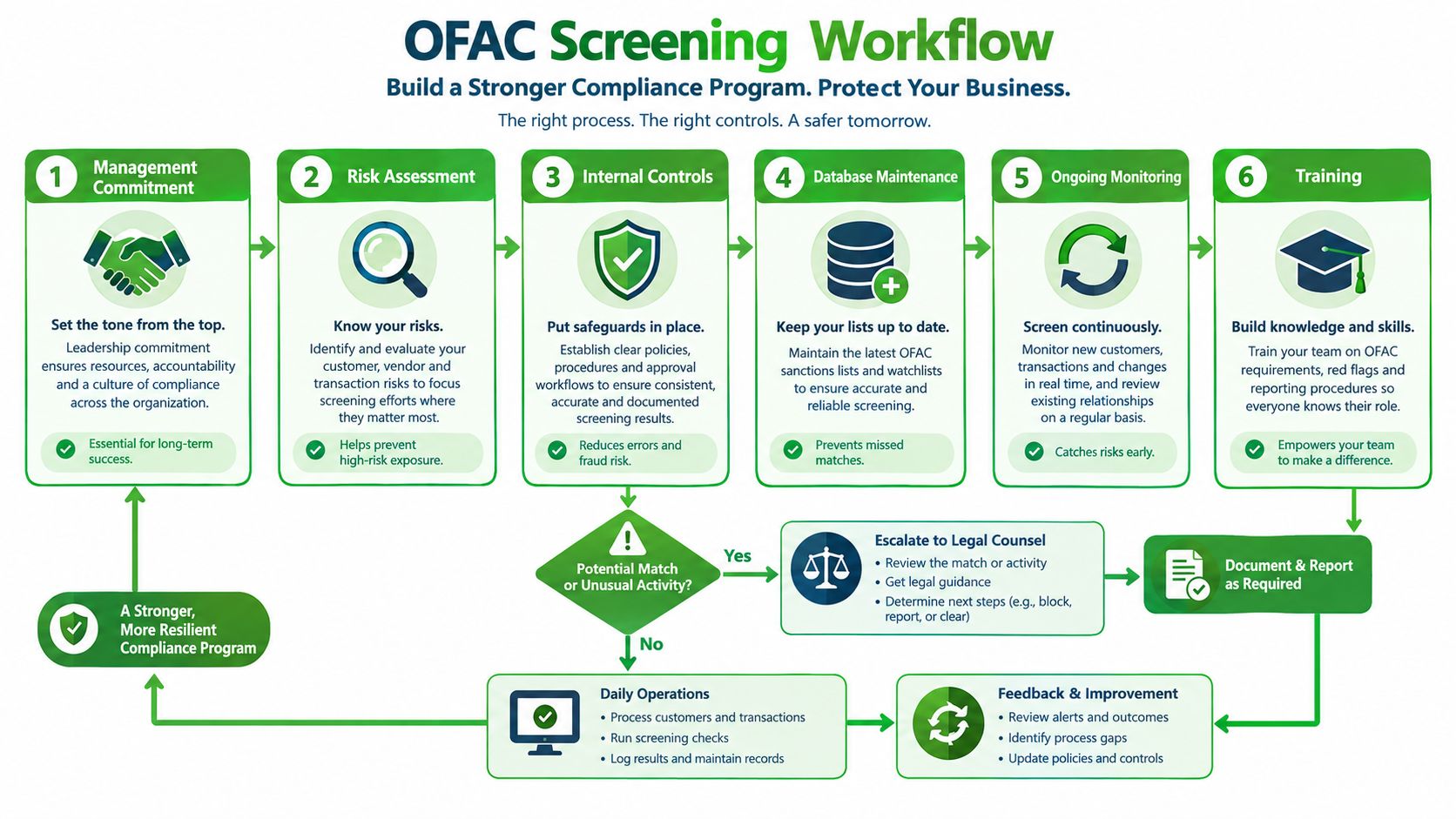
OFAC's compliance model is risk-based, not a universal schedule that every nonprofit must copy. Its framework identifies five core controls: management commitment, risk assessment, internal controls, testing and auditing, and training. The framework expects controls to help an organization identify, interdict, escalate, report, and retain records for potentially prohibited activity, rather than merely produce a database result.
Translate the five controls into daily work
| OFAC Core Control | What It Means for a Nonprofit |
|---|---|
| Management commitment | A board member, executive, or program director owns the sanctions process and supports escalation. |
| Risk assessment | Document which volunteers, donors, vendors, partners, countries, payments, and activities create meaningful exposure. |
| Internal controls | Define when to screen, who reviews alerts, when to pause activity, and how decisions are approved. |
| Testing and auditing | Check whether searches run correctly, records are retained, alerts receive dispositions, and list data stays current. |
| Training | Give coordinators plain-language instructions for recognizing an alert and escalating it without making an unsupported decision. |
Start with scope. A volunteer program may screen applicants during onboarding, while a humanitarian charity may also screen donors, overseas partners, vendors, contractors, and payment beneficiaries. The right scope depends on the organization's activities and risk assessment.
Next, write the workflow in ordinary language:
- Collect reliable identifiers. Use the person's full name and available date of birth, nationality, address, or entity information.
- Run the appropriate search. Screen against the relevant OFAC lists and other watchlists required by the organization's policy.
- Pause when necessary. Don't complete onboarding, release funds, or approve a sensitive transaction while a serious alert remains unresolved.
- Review the alert. Compare identifiers, aliases, geography, entity type, and the sanctions program.
- Document the disposition. Record whether the alert was unrelated, resolved, escalated, blocked, rejected, or otherwise handled under an approved authorization.
- Monitor the control. Test list coverage, matching quality, staff understanding, and record retention.
Organizations comparing this process with sanctions screening in cross-border business should remember that the same principles can be scaled down for a volunteer-led group. The system can be simple, but the decisions still need ownership and evidence.
The OFAC sanctions list search is useful only when the search result feeds a controlled review. A screenshot without a disposition, reviewer, or supporting identifiers won't tell the organization what happened.
Control test: If a new coordinator can't explain what happens after an alert, the organization has a search tool but not yet a complete sanctions control.
Handling a Potential Match Without Panic
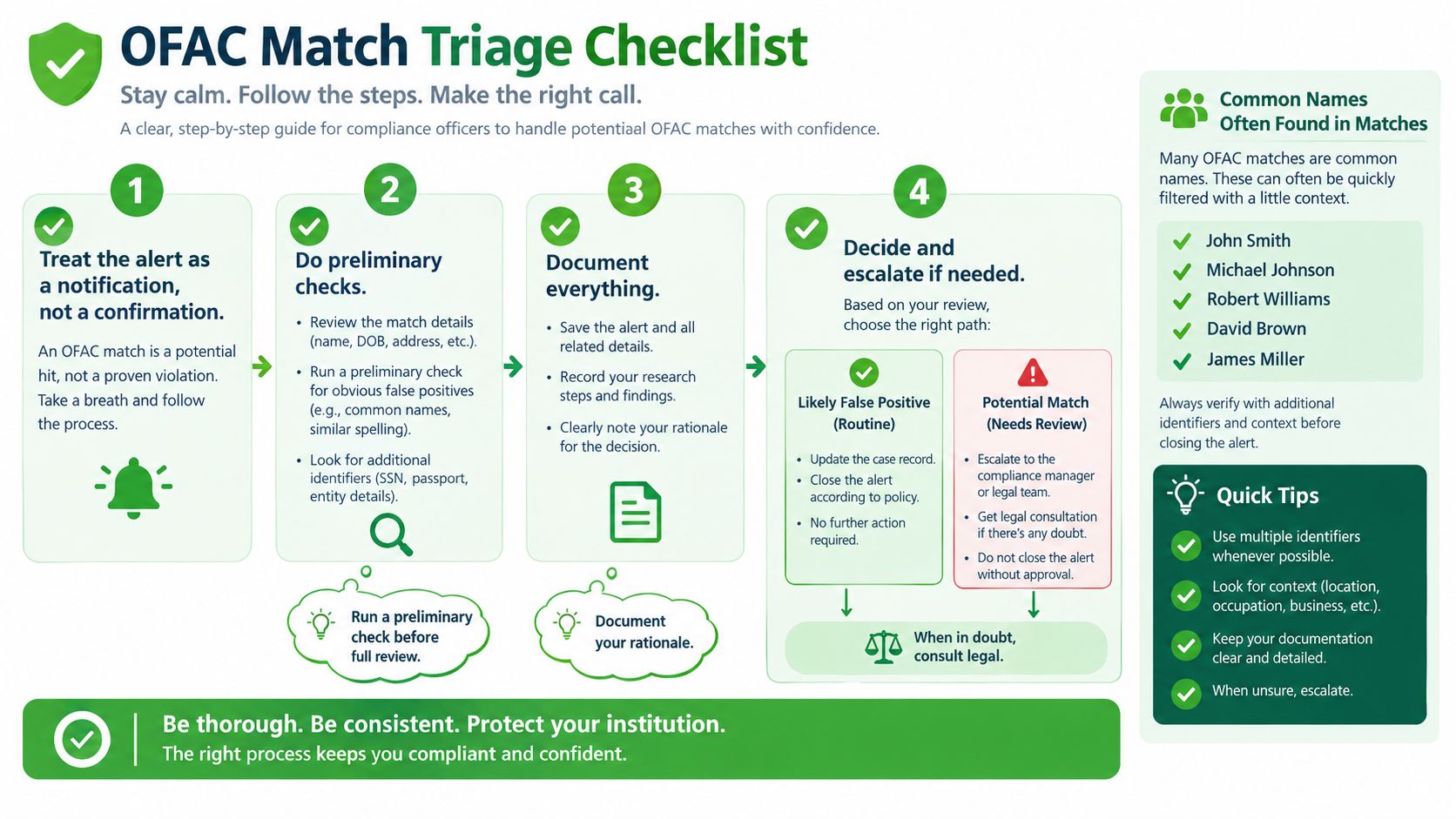
A potential match should feel like a question, not a conviction. OFAC doesn't prescribe a universal matching threshold. Organizations are expected to use their own sanctions-compliance policies and procedures to investigate or disqualify potential matches within a risk-based program.
Four calm questions
1. Could this be the same person or entity? Compare the full name, spelling variations, aliases, date of birth, nationality, address, and geography. For an organization, compare registration details, business address, directors, ownership information, and line of business where available.
2. What kind of subject produced the alert? A person, company, vessel, aircraft, and bank require different identity checks. Don't force an individual volunteer's name into an entity-matching workflow, or treat a business result as if it were a person.
3. What activity is pending? The urgency changes if the organization is preparing to release funds, sign a contract, approve travel, onboard a volunteer, or review an old record. Pause the relevant activity when appropriate while the review proceeds.
4. What conclusion can the records support? If identifiers clearly conflict, document the mismatch and close the alert according to policy. If identifiers align or remain incomplete, escalate rather than guessing.
A name-only alert isn't proof of a sanctions violation. Ignoring an unresolved alert isn't defensible either. The right response is a proportionate review with a clear audit trail.
A short triage record
Use a consistent note that answers:
- Alert source: Which list or screening result generated it?
- Identity evidence: Which identifiers matched or contradicted the listed party?
- Transaction context: What activity was being considered?
- Decision: Was the alert cleared, paused, escalated, blocked, or rejected?
- Approval: Who reviewed and approved the disposition?
- Follow-up: Is additional information or legal guidance required?
Automation deserves special care. High-volume systems can multiply one bad data field or matching rule into many apparent alerts. Human review protects the organization from both extremes, automatic rejection of innocent people and automatic clearance of unresolved risks.
Putting It Together With VolunteerBadge Screening
A nonprofit doesn't need to build every screening function from scratch, but it does need to understand what a tool checks and what staff must still decide. VolunteerBadge includes OFAC sanctions and global watchlist screening within an FCRA-compliant volunteer background-check workflow, alongside criminal and sex-offender searches described by the publisher.
That can support a documented onboarding process: collect authorization, run the check, review potential matches, record the outcome, and apply the organization's escalation policy. The screening result is one control in the broader program. It doesn't replace identity resolution, license review, transaction analysis, or legal advice when the facts are unclear.
The durable approach is proportionate and repeatable. Define the people and transactions in scope, give coordinators a clear alert path, preserve decisions, and test whether the process works in practice.
VolunteerBadge gives nonprofits a structured way to include OFAC and global watchlist screening in volunteer background checks, with FCRA-focused workflow support for applicant review and adverse action when needed. Visit VolunteerBadge to set up a screening process that connects sanctions alerts with responsible volunteer onboarding.
