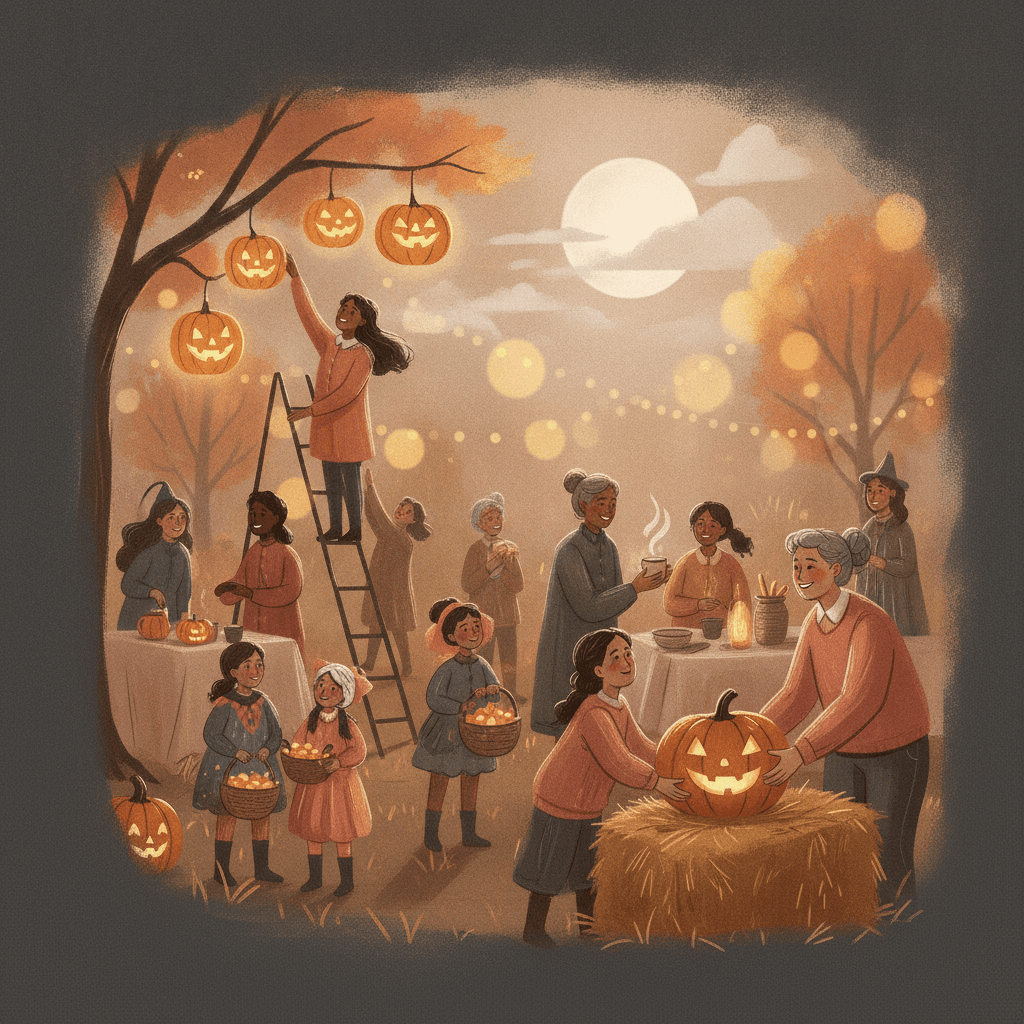
Halloween Community Event Volunteer Statistics (2026)
Halloween is America's 2nd-biggest volunteer season. Discover how many volunteers nonprofits need, which events thrive most, and how to screen & retain your team.
On this page
Halloween is more than candy and costumes—it's one of the busiest volunteer recruitment seasons for American nonprofits, churches, and community organizations. From trunk-or-treat to haunted houses and fall festivals, 73% of American households participate in Halloween or Halloween-related activities , and many of those events depend entirely on volunteers. Understanding the scale, scope, and logistics of Halloween volunteering helps you plan better events, recruit smarter, and protect your organization. This report is part of our volunteer statistics hub, bringing together the latest data on Halloween community event volunteer needs, demographics, and best practices.
Key takeaways
The Halloween Volunteer Boom: By the Numbers
Halloween participation in the U.S. has rebounded to 73% in 2025 , creating unprecedented demand for volunteers to staff community events. When millions of families head out for trick-or-treat, haunted attractions, trunk-or-treats, and fall festivals, nonprofits and municipalities must field large, well-organized volunteer corps.
75.7 million Americans formally volunteered through an organization, representing 28.3% of the population aged 16 and older . Halloween is a peak season: the latest estimated national value of a volunteer hour is $36.14, based on 2025 data released in April 2026 . This means a single 4-hour Halloween event with 50 volunteers generates roughly $7,228 in economic value to the community.
Halloween Event Types & Volunteer Staffing Models
Halloween events vary widely in scale and volunteer need. Understanding your event type helps you recruit the right team size and roles.
Trunk-or-Treat Events
A church trunk-or-treat requires 20 to 40 trunks plus a dozen people running everything around them . More specifically, a trunk-or-treat with 30 trunks needs 30 families, plus about 15 for fixed jobs and 10 for setup and teardown—around 55 volunteers total .
Fixed volunteer positions include parking and traffic (3–4 people with vests), candy check-in and restock (2), a greeter with a map (2), a first aid table (1), and a walker to check which trunks are running low on candy (1) . Popular large-scale trunk-or-treats like the Walnut Creek event welcomes more than 6,000 community members , requiring proportionally larger volunteer armies.
Fall Festival & School Carnival Volunteering
A school fall festival requires 40 to 80 volunteer spots on one evening; a carnival with ten booths and three shifts needs around 60 booth spots, plus 30 for tickets, food, prizes and floaters, plus setup and teardown—around 100 people total .
Building Your Halloween Volunteer Team: Roles & Shifts
Successful Halloween events break volunteer roles into clear, assignable shifts. Organizations with clarity, flexibility, and streamlined coordination saw stronger participation and less volunteer fatigue; tools that enabled simple, structured roles with clear instructions and automated reminders proved especially effective .
Common Halloween volunteer roles include:
- Trunker/Booth Host: Decorates a car trunk in a fun theme and passes out candy; ideally includes an interactive element like a game or activity .
- Candy Station Attendant: Hands out treats and greets trick-or-treaters .
- Activity & Game Helper: Runs games and crafts for children and families .
- Safety & Crowd Support: Helps keep walkways clear, guides families, and ensures a safe environment .
- Setup & Cleanup Crew: Assists with decorating before and cleaning up after the event .
- Parking & Traffic Control: Essential for safety; cut booths before cutting people per booth—eight booths with two people each beats twelve with one .
Recruitment Channels That Work for Halloween Events
Digital-first recruitment has proven most effective for Halloween volunteer sign-ups. In 2025, nonprofits saw strong performance from email (80% recruitment success), Instagram (53% growth in volunteer engagement), and in-person community events (73%) .
Local community projects that leverage social media see 50% more volunteer turnout , and community engagement in events increased by 55% after the introduction of virtual participation options . Tools like sign-up platforms allow families to register, volunteers to grab a spot, and supporters to contribute all from one link, while organizers see who's participating, what's been collected, and what still needs attention without digging through texts or spreadsheets .
Volunteer Retention & Satisfaction in Fall Events
Community engagement and clear role design drive volunteer retention. 77% of volunteers report feeling more satisfied with their lives due to community involvement, and 79% of people involved in community initiatives report increased feelings of happiness .
Volunteers are some of your organization's strongest advocates; use the fall season to spotlight volunteer stories, recognize contributions, and thank those who support your mission—volunteer appreciation campaigns often increase engagement while strengthening donor relationships . 63% of nonprofit leaders agree that community engagement increases volunteer retention .
Screening & Safety: Background Checks for Halloween Volunteers
Halloween events attract families and children. Nonprofits and churches must screen volunteers before event day. Running background checks through an identity-verified screening platform ensures you know who is working with your community. VolunteerBadge provides $5 FCRA-compliant background checks with no monthly fees—ideal for seasonal Halloween volunteers.
Consider your event type when deciding on screening depth. Trunk-or-treat events with family participation may need lighter screening than events involving direct child supervision. For guidance on understanding screening results, consult our resource on how to read background check reports.
Formal volunteering is close to 2019 levels, while informal helping has already surpassed pre-pandemic participation , meaning you'll have more volunteers to screen than ever. A streamlined volunteer import process helps you batch-screen your team quickly.
Economic Impact: The Dollar Value of Your Halloween Volunteers
The estimated national value of a volunteer hour is $36.14, based on 2025 data . For a 30-trunk trunk-or-treat requiring 55 volunteers for 4 hours each, that's 220 volunteer hours—worth approximately $7,948 in economic value to your community.
Americans gave 4.99 billion volunteer hours in the year ending September 2023, valued at roughly $167.2 billion . Fall and Halloween events contribute meaningfully to that total. When writing grant applications or annual reports, use the $36.14 figure to quantify your volunteer program's community impact.
What this means for your volunteer program
Halloween is the busiest volunteer recruitment season outside the holiday giving cycle. To succeed, you need three things:
- Clear Roles & Shifts: Break your event into specific, assignable roles with defined start and end times. The research shows volunteers stick around when they know exactly what to do.
- Digital-First Recruitment: Use email (80% success) and social media (50% turnout boost) to reach volunteers. Sign-up tools reduce admin overhead and improve attendance.
- Volunteer Screening: Before Halloween event day, run background checks on all volunteers working directly with families or children. VolunteerBadge's $5 FCRA-compliant checks process in 24–48 hours with no monthly fees, perfect for seasonal teams.
Halloween events also offer an early pipeline for year-round volunteers. Most volunteer programs have a "get more people" instinct when the data says the real lever is "ask your existing people to invite one"—build that ask into your annual cycle, give it a target, and measure it .
For more on planning specific Halloween event types, explore our guides on trunk-or-treat organization, pumpkin patch management, and related fall community events. And check out our trunk-or-treat volunteer statistics and pumpkin patch volunteer data for event-specific benchmarks.
Download the data
Frequently asked questions
Q: How many volunteers do I need for a Halloween event?
A: It depends on event type. A trunk-or-treat with 30 trunks needs about 55 volunteers total (30 trunker families + 15 core staff + 10 for setup/teardown). A school fall festival with 10 booths and 3 shifts needs roughly 100 volunteers.
Q: What's the best way to recruit Halloween volunteers?
A: Email recruitment has 80% success; Instagram engagement is up 53%. Use a central sign-up tool so families can register roles and shifts in one place. Post 4–6 weeks before your event.
Q: Should I screen Halloween volunteers?
A: Yes, especially if they work directly with children or families. Use an FCRA-compliant background check platform like VolunteerBadge ($5 per check, 24–48 hour turnaround) to ensure safety without breaking your budget.
Q: How do I keep volunteers coming back after Halloween?
A: Recognize contributions in writing, share impact stories, and ask existing volunteers to invite one friend. Personalized appreciation increases retention by 63%.
Q: What's the economic value of my Halloween volunteers?
A: At $36.14 per hour (2025 federal estimate), a 4-hour event with 55 volunteers equals ~$7,948 in community value. Use this figure in grants and annual reports.
Q: What volunteer roles are hardest to fill?
A: Parking/traffic control, setup/cleanup, and first aid stations often go unfilled last. Recruit these roles early and emphasize they require no special skills.
Sources & references
- National Retail Federation / Statista — Halloween Participation in the United States, 2015–2025
- Volgistics — Volunteer Statistics and Trends for 2026
- VolunteerHub — 40 Volunteer Statistics Every Nonprofit Should Know in 2026
- SignUpGenius — The State of Volunteering 2025: Trends & What to Expect in 2026
- U.S. Census Bureau & AmeriCorps — Civic Engagement and Volunteerism, 2024
- Sender.net — 70+ Halloween Statistics and Spending Trends (2026)
- Pumpkin Patches and More — 2026 Halloween Facts, Trends and Statistics
- JustSignup — How to Get Enough Volunteers for a Trunk or Treat or Fall Festival
- City of Walnut Creek Arts + Recreation — Trunk or Treat, October 2026
- Ronald McDonald House Orange County — Trunk or Treat 2022 Volunteer Job Description
- ZipDo — Community Engagement Statistics 2025
- WiFi Talents — Community Engagement Statistics: Reports 2025
- The Giving Block — The Best Fall Fundraising Ideas for Nonprofits
- GoHarness — 24 Halloween Fundraising Ideas for Nonprofits That Just Work
- GoFundMe Pro — 8 Halloween Fundraiser Ideas for Nonprofits
- Eventeny — Safe Halloween Volunteer Event Details, October 2025
- Bonterra — 30+ Facts About Volunteering and Statistics
- Guidebook — What Are Community Engagement Events? Strategies & Best Practices
- SeeMyLegacy — Fall Festival Volunteer Sign-Up
- Solutions Matter LLC — How Nonprofits Can Use Halloween to Engage Potential Donors
- AARP Create the Good — 6 Spooktacular Ways to Give Back This Halloween
- Church Property Insurance — Top Halloween Ideas for Nonprofit Organizations
- OneCause — 20+ Nonprofit Fall Fundraising Ideas to Inspire Generosity
- Constant Contact — Halloween Fundraising Ideas for Your Nonprofit
- TicketLeap — 15 Spooktacular Halloween Fundraising Ideas
- Clermont Spotlight — Clermont Seeks Community Participation for Annual Scaremont Halloween Event, August 2026
- Idealist.org — Volunteer Opportunity Listings (Multiple Halloween Events, 2025–2026)
- Voice of OC — Free Things to Do: Halloween Crafts and Volunteer Opportunities
- Boulder County Government — Halloween Trail Work Volunteer Opportunity
- Patch (Peekskill, NY) — Volunteer Opportunities of the Week: Halloween Treat-or-Treat
First published: October 2, 2026
Last updated: October 2, 2026
This is a living report. VolunteerBadge refreshes it yearly to reflect the latest AmeriCorps, Census Bureau, Independent Sector, and industry survey data. Halloween volunteer needs evolve with technology and community trends. Subscribe to the VolunteerBadge blog to stay updated.
Educational resource, not legal advice. Always consult your state's volunteer liability laws and nonprofit governance guidelines. For background check questions, contact our support team.
