How to Start a Nonprofit in Rhode Island
Rhode Island is cheap to incorporate in and lets most new charities wait before registering to fundraise — the obligation is triggered by $25,000 in contributions, not by existing. Here is what qualifies as a 501(c)(3), the sequence that keeps your costs down in year one, and the annual report window that catches people every spring.
On this page
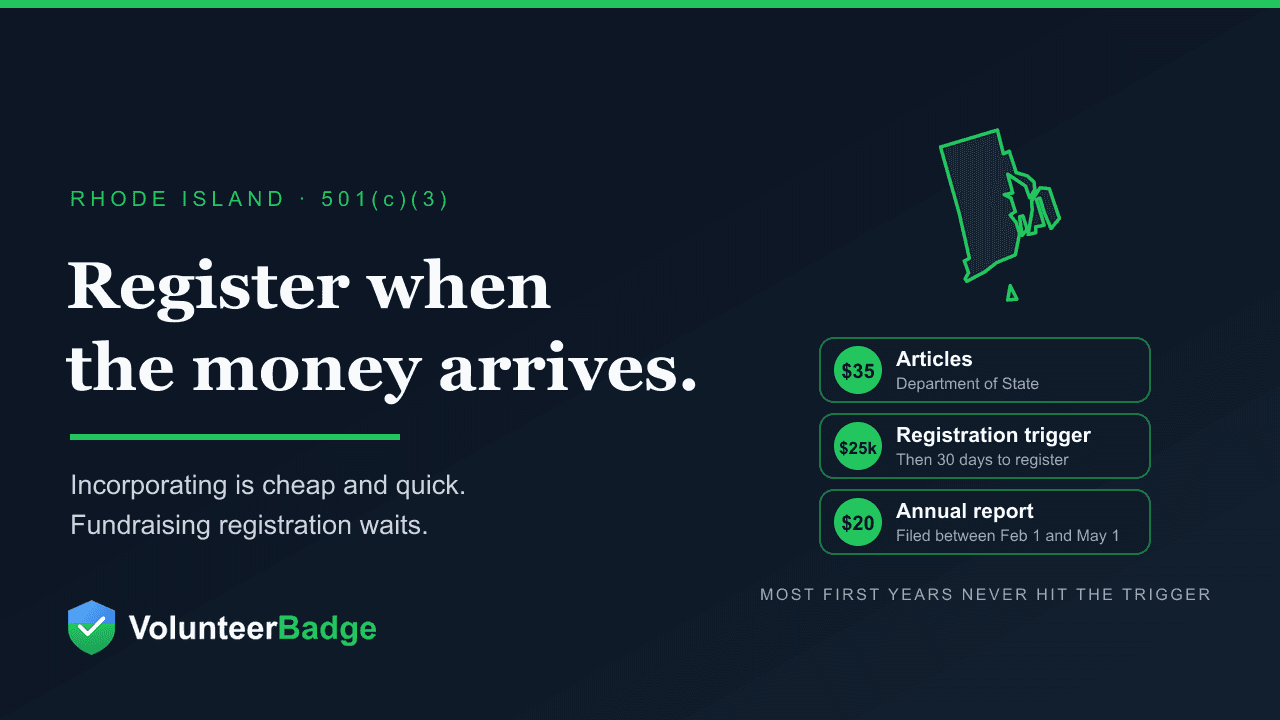
Rhode Island sequences well for a brand-new charity. Incorporating costs $35. The expensive annual obligation — $90 a year to register as a charitable organization — is triggered by money arriving, not by the organization existing: it attaches once you have received more than $25,000 in total contributions, and then you have 30 days. A great many first years never reach that line.
That makes the order you do things in worth more here than in most states. This guide covers what actually qualifies as a 501(c)(3), the sequence that keeps year one lean, and the one deadline — a filing window, not a date — that catches Rhode Island nonprofits every spring.
The smallest state is an advantage here
Rhode Island is small enough that the people who run things know each other. For a new nonprofit this is a genuine strategic asset and worth using deliberately: the Rhode Island Foundation, United Way of Rhode Island and the state’s hospital and university systems are a short and reachable list, and a well-made introduction travels further here than a cold grant application does almost anywhere else.
It also means the first question is worth asking honestly. In a state this size, is there already an organization doing most of what you are proposing? If there is, becoming a program inside it — or taking fiscal sponsorship from it — often gets the work started years earlier than building a parallel institution. Rhode Island does not have room for three of everything, and funders here know it.
What actually qualifies as a 501(c)(3)
Section 501(c)(3) is about purpose and conduct, not about whether you intend to make a profit. To qualify, an organization must be both organized and operated exclusively for one or more exempt purposes:
- Charitable — relief of the poor and distressed, advancement of education or religion, lessening neighborhood tensions, combating community deterioration, defending human and civil rights, lessening the burdens of government.
- Religious, educational, scientific, literary
- Testing for public safety
- Fostering national or international amateur sports competition
- Preventing cruelty to children or animals
Then two gates:
Organized
Your articles must limit the corporation to exempt purposes and permanently dedicate assets to them, with a dissolution clause sending anything left to another 501(c)(3) or a government unit. This is the single most common reason a first application comes back.
Operated
No private inurement — nothing of value flowing to insiders beyond reasonable pay for real work. No intervention in political campaigns at all. Lobbying only as an insubstantial part of activities. This is judged on what you do, every year, not on what you wrote once.
A fair salary to a working founder is allowed and normal. A below-market lease from a director, a loan to an officer, or a program whose main beneficiary is the founder’s own business is the kind of thing that costs organizations their exemption.
Step 1 — Incorporate: $35
File Articles of Incorporation for a domestic nonprofit corporation with the Rhode Island Department of State, Business Services Division. The fee is $35.
Decide before you file:
- Registered agent with a Rhode Island street address, available during business hours.
- Members or no members. Most new charities are board-governed with no voting membership class — simpler, and it avoids handing statutory rights to a group you have not built yet.
- Purpose and dissolution clauses written for the IRS. Do this now; amending articles later costs another filing.
Step 2 — EIN, then the IRS
The EIN is free and immediate from the IRS website. You need it for the bank account and the exemption application.
Form 1023-EZ — $275
For organizations expecting $50,000 or less in annual gross receipts and holding $250,000 or less in assets, subject to the rest of the eligibility checklist. Most new Rhode Island charities fit.
Form 1023 — $600
The long form: activity narrative, budgets, conflict-of-interest policy, compensation detail. Required above the thresholds, and for churches, schools and hospitals regardless of size.
File within 27 months of the end of the month you incorporated and your exemption is retroactive to formation, which makes every gift received while you waited deductible. That window is the reason you can start fundraising before the determination letter arrives — provided you are straight with donors that the application is pending.
Step 3 — Charitable registration, when the money says so
This is the step to sequence deliberately. Rhode Island charitable organization registration costs $90 each year, and registrations and renewals must be filed within 30 days of receiving total contributions greater than $25,000.
For an organization in its first year running on a few thousand dollars of local giving, that obligation may simply not have attached yet. For one that lands a single large grant in month three, it attaches immediately and the clock is 30 days.
Step 4 — State tax exemption
Federal exemption does not carry over automatically. Once the IRS determination letter is in hand, apply to the Rhode Island Division of Taxation for sales and use tax exemption — the relevant form is EXO-SUE, open to organizations awarded 501(c)(3) status or otherwise listed as eligible. For a nonprofit that buys supplies, equipment or food in any volume, this is usually worth more per year than everything you spent to incorporate.
The annual report is a window, not a date
Rhode Island nonprofit corporations file an annual report with the Department of State. Three things about it are specific enough to be worth memorizing:
And then people volunteer
The paperwork is finite. The responsibility that starts when other people join you is not.
The first time a volunteer is alone with a child at your program, or driving an older neighbor to an appointment, you are making a decision about who gets that access — whether or not you have thought of it that way. Small nonprofits usually meet that moment without a screening budget, because traditional providers price for employers: a single check can cost more than everything you paid the state to exist, and the plans often carry monthly minimums a new organization will never reach.
VolunteerBadge exists for that gap. A full FCRA-regulated background check is $5, with no contract and no minimum, and the volunteer keeps a verified badge they can carry to the next organization they serve.
Create your organization — set it up and invite your first volunteers before the determination letter arrives.
Sources
- Rhode Island Department of State — Non-Profit Costs and Fees
- Rhode Island — Non-Profit Corporation Articles of Incorporation Filing Guide (PDF)
- Rhode Island Form 631 — Annual Report for a Non-Profit Corporation (PDF)
- IRS — Exemption Requirements, 501(c)(3) Organizations
- IRS — Form 1023 and 1023-EZ: Amount of User Fee
Fees and deadlines verified against the sources above in October 2026. State fees change; check the official page before you file. This is general information about public filing requirements, not legal or tax advice — for your specific situation, talk to a Rhode Island attorney or CPA.
