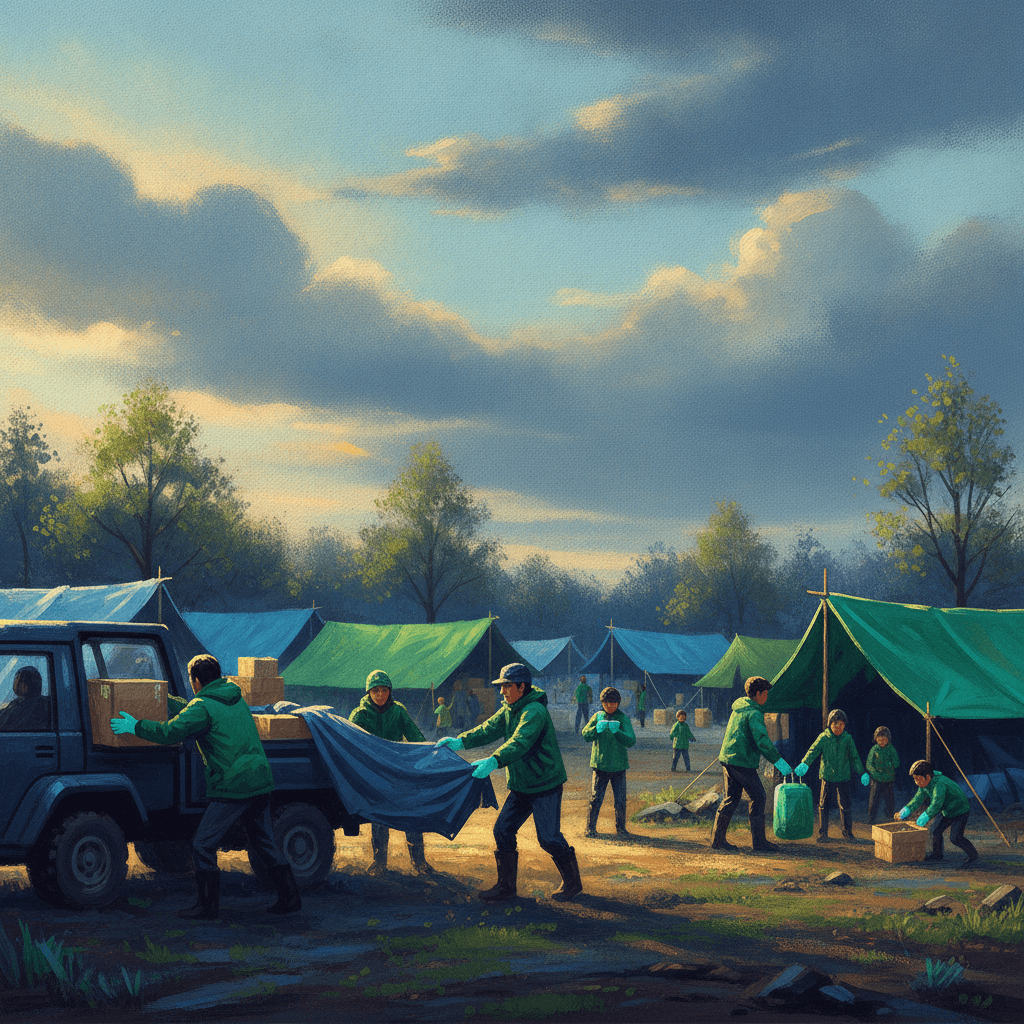
How to Plan, Launch & Run a Food Pantry: The Complete Nonprofit Leader's Guide
Master the complete workflow for starting and managing a food pantry—from funding to volunteers to day-of operations. Evidence-based strategies, real budgets, checklists, and 25+ sources.
Food insecurity in America is at a critical inflection point. 47.9 million people lived in food-insecure households in 2024 , and 14.1 million children lived in households that experienced food insecurity . Food pantries are the backbone of the emergency food network—and they depend almost entirely on volunteers. Yet more than 75% of these organizations rely completely on volunteers, with no paid staff .
This guide is for nonprofit leaders, church coordinators, and community organizers who want to launch or significantly expand a food pantry. You'll learn how to set goals, build a lean budget, recruit and screen volunteers, design safe operations, and measure real impact—all grounded in the experiences of dozens of operating pantries and best practices from Feeding America and food bank operators nationwide. By the end, you'll have a step-by-step roadmap to open your doors and serve families reliably. For detailed data on volunteer hours, client demographics, and food-distribution trends, see our companion food pantry volunteer statistics report.
Table of contents
- Why a food pantry matters—and who you'll serve
- Setting goals and defining your scope
- Your launch timeline: 3–12 months
- Budgeting and fundraising
- Recruiting and onboarding volunteers
- Roles, structure, and leadership
- Volunteer screening and safety protocols
- Logistics, operations, and food safety
- Marketing and community outreach
- Day-of execution and client experience
- Measuring impact and volunteer appreciation
- Common mistakes and scaling strategies
- Screen your volunteers the easy way
- Frequently asked questions
- Sources & references
Why a food pantry matters—and who you'll serve
Before diving into planning, understand the crisis you're responding to. The food insecurity rate in the United States was 14.4% in 2024 —meaning roughly 1 in 7 households lacks reliable access to adequate food. The impact is not abstract. More single-parent households headed by women experienced food insecurity at 36.8 percent , and rates of food insecurity remained high for Black (24.4 percent) and Latinx (20.2 percent) households .
Food pantries fill a critical gap. According to Feeding America, a nationwide network of 200 food banks and 60,000 partner food pantries, food banks acquire their food through donations, purchasing, and federal programs . Local pantries do the last-mile work: they receive bulk food, sort and organize it, and hand it directly to families who walk through their doors. In one large regional food bank, volunteers worked 55 K shifts totaling 138,000 hours . That's the scale of your volunteer need—and your potential impact.
Your pantry will likely serve a mix of working poor, seniors on fixed incomes, families experiencing sudden job loss, and individuals with disabilities. Understanding who you serve shapes everything: your hours, your food selection, your accessibility, and your volunteer roles. A small pantry might serve 25–30 families per distribution; a larger one can serve hundreds.
Setting goals and defining your scope
Before you spend a dollar or recruit a volunteer, clarify your mission and constraints. Ask these questions:
- Service area: Will you serve a single neighborhood, a whole district, or multiple counties? One food bank's main facility serves about 20,000 to 25,000 visitors each month, representing almost 5,000 families . Start small and grow.
- Food model: Will you operate a traditional pantry (client-choice or pre-packed bags), a mobile pantry, a kitchen program, or a mix? Client-choice models give families dignity and reduce waste; pre-packed is faster and requires less staffing.
- Hours of operation: Will you open weekday mornings (working poor + seniors), evenings (working families), or weekends (families with school/work)? It is essential to consider the population you are serving (e.g. young, old, working, all of the above), the time of day most suitable to those individuals .
- Distribution frequency: All member agencies must serve at least three days of food per household once a month . Will you aim for monthly, twice-monthly, or weekly distributions?
- Volunteer headcount: A small food pantry needs 3–5 volunteers per distribution . A 4-hour Saturday morning shift with 5 roles = 20 volunteer-hours. If you want 2 distributions per month, that's 160 hours—roughly 4 full-time employees' worth of work spread across your volunteer base.
Document your answers in a one-page pantry charter. This becomes your north star and your tool for recruiting leadership and volunteers. Include your target population, geographic service area, operating model, and intended launch date.
Your launch timeline: 3–12 months
Most food pantries take 3–6 months to launch if you're leveraging existing space (church, community center, school) and 6–12 months if you're finding and outfitting new space. Here's a realistic calendar:
| Phase | Month(s) | Key milestones |
|---|---|---|
| Discovery & Planning | 0–1 | Convene steering committee (5–10 people). Document mission, service area, hours. Assess competing services. Identify potential location. |
| Legal & Infrastructure | 1–3 | Secure space (lease or donation agreement signed). Apply for 501(c)(3) or affiliate with existing nonprofit. Obtain food handler permits, insurance quote. Buy shelving, coolers, equipment. |
| Food Bank Partnership | 2–3 | Contact regional Feeding America food bank. Complete partner agency application. Attend orientation. Set up ordering system (eHarvest or equivalent). |
| Volunteer Recruitment | 2–4 | Write role descriptions. Launch recruitment via church bulletins, community groups, social media. Host open houses or volunteer fairs. Collect first 10–15 commitments. |
| Soft Launch | 3–5 | Pick up first food order. Run 1–2 volunteer training sessions. Test operations with small group (friends, board members). Refine processes. |
| Community Awareness | 4–6 | Post flyers, social media, local 211 directory. Reach out to schools, churches, social services. List hours and location everywhere. |
| Grand Opening | 5–6 | First public distribution. Have 10+ volunteers, 2–3 hours of food, intake forms ready. Expect modest turnout; focus on quality service, not volume. |
| Stabilization & Growth | 6–12 | Refine volunteer scheduling. Scale food orders based on demand. Build second distribution channel or extend hours. Measure client satisfaction and impact. |
The steering committee should meet weekly during the planning process in order to move the project forward, but should be able to switch to monthly meetings once the pantry is up and running . This keeps momentum and accountability clear.
Budgeting and fundraising
Startup costs vary widely by model and location. Startup costs range from nearly $0 (if hosted by a church with existing space) to $5,000-$10,000 for a standalone operation (refrigeration, shelving, insurance, supplies) . Here's a realistic breakdown for a small community-based pantry:
| Category | Small (Shared Space) | Standalone |
|---|---|---|
| Space (first month) | $0 | $1,000–$2,000 |
| Shelving & storage units | $500–$1,000 | $1,500–$3,000 |
| Commercial refrigeration | $0 (existing) | $2,000–$5,000 |
| Initial food stock | $500–$1,000 | $1,000–$2,000 |
| Legal (501c3 filing, permits) | $300–$600 | $500–$1,000 |
| Insurance (annual, estimated) | $800–$1,500 | $1,500–$2,500 |
| Supplies (bags, gloves, cleaning) | $200–$400 | $400–$700 |
| Website, signage, marketing | $100–$300 | $200–$500 |
| Technology (volunteer scheduling, intake forms) | $0–$100/month | $50–$200/month |
| Total First-Year Startup | $2,300–$5,400 | $8,150–$17,700 |
Monthly operating costs (after launch):
- Food procurement: Contact your regional Feeding America food bank to become a partner agency. This gives you access to bulk food at very low cost ($0.10-0.19/pound) . Budget $300–$800/month depending on volume and whether you receive local donations.
- Utilities: $100–$300/month (electricity, water, internet).
- Transportation: $100–$300/month (picking up food from food bank, occasional deliveries).
- Supplies: $50–$150/month (bags, gloves, cleaning, labels).
- Insurance & misc: $100–$250/month (prorated annual insurance, pest control, repairs).
Funding strategy:
- Secure a fiscal host or 501(c)(3). If you're part of a church or established nonprofit, use their status—saves 3–6 months and $300–$600.
- Start small with VolunteerBadge background checks ($5 per volunteer when you launch screening) rather than expensive vendor contracts upfront.
- Approach local foundations, civic groups, and restaurants for startup grants ($2,000–$5,000). Many prioritize food security.
- Launch a one-time community fundraiser (bake sale, 5K run, benefit dinner) to cover shelving and refrigeration.
- Solicit in-kind donations: used commercial shelves, donated coolers, volunteer labor for setup.
- Apply for USDA or state grants once operating. One large food bank saw more than 36,000 volunteers who contributed nearly 239,000 hours of service, the equivalent of 115 full-time employees —document this impact in grant proposals.
Consider building one — 3–6 months of operating expenses is the standard nonprofit best practice for your cash reserve. If monthly costs are $800, aim to raise $2,400–$4,800 in buffer before opening.
Recruiting and onboarding volunteers
Your pantry lives or dies by volunteers. In Maine, the nearly 600 hunger relief agencies that get free and low-cost food rely on volunteers, including 250 food pantries as well as soup kitchens, senior centers, shelters, schools and youth programs. More than 75% of these organizations rely completely on volunteers, with no paid staff . The challenge is real— many of the volunteers are elderly. There's a shortage of young volunteers who can manage the physical work involved . You'll need a deliberate, multi-channel recruitment strategy.
Where to recruit:
- Faith communities: Churches, synagogues, mosques. Mention food distribution in sermons and bulletins. Many congregants see this as a core mission.
- Schools and universities: Community service hour requirements, service clubs (Rotary, Lions, Kiwanis), student government.
- Local businesses: Corporate volunteer days (especially tech companies and banks looking for team-building).
- Social media & community groups: Post on Facebook, Nextdoor, local neighborhood apps. Make sign-ups easy (link in post).
- Retirement communities and senior centers: Retirees have time, energy, and a strong sense of purpose.
- Court-ordered community service: Partner with local courts and probation offices. Court-mandated volunteers are responsible for tracking their own hours. Any paperwork to be signed must be brought to the food bank to be signed upon completion of the hours worked each day. Hours for court-mandated community service: Monday thru Friday, 8am-4pm .
Effective role descriptions: Don't just say "volunteers needed." Be specific and mission-driven. Lead with the role's impact before describing the tasks. "You'll help families access groceries" lands better than "You'll stock shelves." Example:
Food Pantry Volunteer — Saturday Mornings
You'll help families in our community access groceries every Saturday from 9 a.m. to 12 p.m. No experience needed—just bring a positive attitude and comfortable shoes. Sign up here: [link]
Recruitment tactics:
- Host open houses. Invite the community to tour the pantry, meet volunteers, and sign up on the spot. Organize tours, open houses, or volunteer meet-and-greets. This allows them to see firsthand how they can contribute and helps build early connections with your organization .
- Use referral programs. Encourage current volunteers to bring friends, family, or colleagues along. People are more likely to participate if someone they know is already involved .
- Make signup seamless. Use a simple online form or a signup sheet at community events. Collect name, phone, email, availability, and any relevant skills (driving, handling food, etc.).
- Follow up quickly. Email or call volunteers within 48 hours of signup. Confirm their first shift and send them prep materials (what to wear, what to expect, where to park).
Volunteer tiers and volume:
- Core team (3–5 people): Weekly or bi-weekly recurring volunteers. These are your backbone—assign them team-lead roles and leadership training.
- Regular volunteers (10–20 people): Commit to a monthly or twice-monthly shift. Build a sense of belonging; send monthly impact updates.
- Flexible volunteers (20–50+ people): Sign up for shifts via an online calendar. Expect turnover; always have a waiting list.
- Group volunteers (schools, corporate teams): Coordinate one-off shifts (e.g., a class of high schoolers on a Saturday, a bank's annual service day). These bring energy but require extra coordination.
A small pantry (25–50 families per distribution, 4-hour shift) needs at least 5–8 volunteers per shift. A medium pantry (100–200 families) needs 10–15. Build your recruitment goal accordingly—always oversample for attrition and seasonal dips.
Roles, structure, and leadership
No one can run a successful food pantry alone. Just as you need a group of volunteers to carry out the work, you need a group of trusted leaders to ensure that the pantry fulfills its mission in the community . Here's a proven organizational structure:
Board/Steering Committee (5–10 people, meet monthly):
- Executive director or coordinator (1 person, can be part-time or volunteer)
- Treasurer (manages budget and donor relations)
- Volunteer coordinator (recruitment, scheduling, retention)
- Community member or client representative
- Representative from local food bank or major funder
Day-of volunteer roles (distribute these across your volunteer base):
- Shift lead (1): Oversees the operation, troubleshoots issues, ensures safety. Reports to coordinator.
- Intake/check-in (1–2): Greets clients, collects basic info (name, household size, # of days of food needed), makes them feel welcome. Make sure clients feel welcome - have someone greeting people as they come in .
- Food selection/shopping guide (1–2): Helps clients navigate food choices, answers questions about nutrition, ensures balanced selections.
- Packing/checkout (1–2): Loads bags or boxes, verifies items, hands food to clients. Should be able to lift 30–40 lbs.
- Cleaning/restocking (1–2): Tidies up before/after, replenishes shelves, organizes next week's food. Keep food organized by food group on pantry shelves. Have workers come to the pantry before open pantry hours, so that items can be restocked and tidied up, if necessary .
- Drivers (as needed): Pick up food from regional food bank, deliver to homebound clients. Requires valid license and vehicle insurance.
Volunteer coordinator responsibilities:
- Maintain a master volunteer roster (name, phone, email, availability, skills, background-check status).
- Schedule volunteers 4–6 weeks in advance using a shared calendar (Google, SignUpGenius, or volunteer management software).
- Send weekly reminders to upcoming volunteers.
- Conduct onboarding (one 30-minute orientation per volunteer covering mission, safety, food handling, client dignity).
- Track volunteer hours.
- Recognize and thank volunteers (monthly emails, annual events).
For a deeper dive into volunteer management systems and best practices, see our nonprofit volunteer-management guide.
Volunteer screening and safety protocols
Screening volunteers protects your clients, your organization, and your volunteers themselves. Background checks help ensure vulnerable groups — children, seniors, individuals with disabilities — are protected from harm and shield organizations from potential liability and reputational fallout .
Who needs a background check?
Not all volunteer roles require background checks—focus on risk-based screening. Use risk-based screening—checks for high-responsibility roles, lighter onboarding for low-risk roles—to balance safety with accessibility . For a food pantry:
- High-risk roles (check required): Shift lead, anyone handling money or donor databases, anyone entering client homes (delivery drivers), anyone with direct contact with children or vulnerable adults.
- Moderate-risk (recommended): Intake volunteers, food selection, packing.
- Low-risk (optional): Cleaning and restocking volunteers with no direct client contact.
What to screen for:
Background checks for volunteers are screenings used to review a volunteer's identity and history before they are allowed to work with or around vulnerable populations. Volunteer background checks typically include: Identity verification (SSN trace and address history), National criminal database search, County-level criminal history searches, Sex offender registry checks, Alias and name matching, Optional role-specific checks (MVR, license verification) .
FCRA compliance is non-negotiable:
- Get written consent. Under the FCRA, volunteers must sign a clear, standalone disclosure form before any check begins. Don't even think about skipping this step, as it can lead to a world of legal trouble .
- Provide an adverse-action notice if you plan to deny a volunteer role based on screening results. Give them a chance to dispute.
- Keep results confidential. Store in a locked file or secure digital system. Never share with other volunteers or the public.
- Document everything. Keep copies of consent forms, results, and hiring/rejection decisions for your records.
Cost-effective screening: Feeding America food bank to become a partner agency. This gives you access to bulk food at very low cost ($0.10-0.19/pound) . Similarly, look for affordable FCRA-compliant screening. VolunteerBadge offers $5 per FCRA-compliant national background checks with free identity verification and no monthly fees—making it easy to screen dozens of volunteers without breaking your budget.
Ongoing screening (rescreening policy):
Negligent retention — keeping someone in a role after warning signs emerge — carries the same legal exposure as negligent hiring. If a volunteer causes harm and your organization can't demonstrate it maintained reasonable, ongoing oversight, you face liability regardless of whether the initial screen was clean . Set a rescreening interval: every 1–2 years for high-risk roles, every 2–3 years for moderate.
Waiver and liability:
Have all volunteers sign a simple liability waiver upon onboarding. Release and Waiver. The volunteer fully and forever releases and discharges the Organization from, and expressly waives, any and all liability, claims, and demands of whatever kind or nature, either in law or in equity, that may arise from their participation in the Activities. The volunteer agrees not to make or bring any such claim or demand against the Organization . Consult your insurance provider or attorney for precise wording.
Logistics, operations, and food safety
Location and space requirements:
A food pantry facility should be a safe, sanitary and secure place to store food . Minimum specs:
- Dry storage: 300–500 sq ft for shelving, at least 2–3 industrial metal shelves per section (produce, proteins, dairy, canned, dry goods, non-food items).
- Refrigeration: At minimum, one reach-in refrigerator (6–8 cu ft, ~$2,000) and one freezer. Commercial walk-in units cost $5,000–$10,000 but serve large operations.
- Checkout/intake area: Table, chairs, computer or tablet for intake forms.
- Accessibility: ADA-compliant entry, parking for clients (even if shared), clear signage.
- Security: Have a wide-angle viewer installed in the door to the pantry. Have a dead bolt and chain on the main entrance of the pantry. Have all windows bolted or nailed to prevent entrance by intruders .
- Hygiene: Hand-washing station, sanitizer, clean bathrooms.
Food storage and safety practices:
- FIFO (First In, First Out): Mark the date received on all cases of food and start a first-in, first-out system . Older items go out first.
- Temperature control: Use thermometers and regularly monitor the temperature of refrigerators (35-45° F) . Keep a log.
- Inspection: Check cans for leaks, bulges, rust and big dents, and when in doubt, throw it out .
- Organization: Keep food organized by food group on pantry shelves (produce, proteins, dairy, grains, pantry staples, non-food). Label clearly.
- Pest control: Maintain pest control systems; have a contract with a licensed pest control firm . At minimum, quarterly inspections for smaller operations.
- Separation: Store food off the floor and away from the walls so pests won't have a place to hide and to protect the food from moisture. Separate edible food items from non-food items .
- Food handler certification: Contact the local health department for training in food handling and safety . Require your shift lead and at least 2 other volunteers to complete this (usually free or $20–$50 online).
Daily operations checklist:
A checklist may be the easiest way to guarantee all tasks are completed each day. An opening and closing checklist will ensure the most important things are done regularly . Sample:
Opening (15 min before doors open):
☐ Unlock, alarm off, lights on
☐ Check fridge/freezer temps, log if needed
☐ Restock shelves from storage
☐ Clean tables, sweep floor
☐ Set out intake clipboards, pens
☐ Verify all volunteers present
Closing (after last client leaves):
☐ Count and log remaining food
☐ Restock shelves for next distribution
☐ Wipe down counters, refrigerators
☐ Check for damage, pest activity
☐ Secure all doors and windows
☐ Log volunteer hours
☐ Report any issues to coordinator
Ordering from your food bank:
Volunteer shifts in the Volunteer Center range from 2 to 2.5 hours depending on the day. If you cannot stay for the full duration of the volunteer shift, we ask you notify our volunteer coordinator in advance . Similarly, schedule food pickups on consistent days (e.g., every first Thursday). Most food banks use online ordering systems (eHarvest, FreshConnect). Pick a diverse mix:
- Fresh produce (refrigerated or rotating pickup to reduce spoilage).
- Proteins (canned and frozen chicken, tuna, beans).
- Dairy (milk, cheese, yogurt).
- Grains and pasta.
- Pantry staples (oil, rice, peanut butter).
- Infant formula, diapers, toiletries if budget allows.
Track client demand: if families are asking for gluten-free options, start requesting those. If seniors are frequent, prioritize softer textures and lower-sodium items.
Marketing and community outreach
Your pantry won't serve anyone if people don't know it exists. Launch an outreach campaign 4–6 weeks before opening.
Direct outreach channels:
- Community 211 directory: Contact the local community help line (211). In some communities, the lack of awareness drives people away. Get listed immediately (free).
- Schools, libraries, shelters, clinics: Post flyers in high-traffic areas serving low-income populations. Include hours, address, phone, eligibility (if any), and what to bring (ID, proof of address).
- Faith communities: Announce in newsletters, bulletins, social media.
- Local media: Write a press release and send to local news. Food pantry openings are community-interest stories—especially if you mention the number of food-insecure families in your area.
- Social media: Start a Facebook page or Instagram account. Post hours, photos of available food, volunteer opportunities, client testimonials (anonymized), and impact milestones.
- Word of mouth: Distribute flyers to existing clients and ask them to spread the word. The best recruitment is a satisfied client.
Messaging: Lead with dignity and hope, not charity. Example:
Everyone deserves nutritious food. [Pantry name] is here to help families access groceries with dignity and no shame. Open Saturdays 9am–12pm at [address]. No registration required. Bring ID or proof of address.
Day-of execution and client experience
Your pantry's reputation hinges on the first-time visitor experience. Make every interaction affirm dignity.
Client intake process:
Ask your clients only for information you really need. In most cases, the following is sufficient: Name, address, phone number. A count of how many people are in their household. A best guess of how many days of food they need . That's it. No questions about employment status, immigration, or prior assistance (those can breed shame and discourage return visits).
Client-choice vs. pre-packed:
- Client-choice model: Relatively little of a what a client-choice food pantry distributes goes to waste . Clients select items within their category limits (e.g., 3 grains, 2 proteins, 2 produce, 1 dairy). Requires more staff but increases dignity and reduces waste.
- Pre-packed model: Faster, fewer decisions needed, good for high-volume distributions or very limited staff. Less client choice, but still can be warm and welcoming.
Tone and setting:
- Greet by name. Use a warm tone, make eye contact. Have someone greeting people as they come in .
- Provide seating while they wait. Give the client a chair comparable to the one used by the interviewer. An inferior chair is a clear reminder of the client's status .
- Explain the process. Serve clients promptly, or if they have to wait, give them a reasonable reason why. Have the client seated at the side of the desk (a conversational positioning), and make sure they can see everything that is being written down .
- Pack carefully. Make sure bags or boxes are sturdy, organized, and not overstuffed. Offer plastic bags, paper bags, or reusable options if available.
- Ask about allergies, preferences, dietary needs. "Do you have any food allergies or dietary preferences I should know about?" shows you care.
- Connect to services. Have brochures for local job training, SNAP enrollment, medical clinics. Referring agencies should be kept up to date on the pantry's procedures and hours of operations .
Running the numbers (sample 2-hour Saturday distribution):
| Time | Activity | Volunteers assigned |
|---|---|---|
| 8:45–9:00 a.m. | Setup, volunteers arrive, food on shelves | Shift lead + 2 restocking |
| 9:00–11:00 a.m. | Clients arrive, intake, shopping, packing | 2 intake, 2 packing, 1 food guide, shift lead roaming |
| 11:00–11:30 a.m. | Last-minute clients, final cleanup | 3–4 volunteers, especially cleaning crew |
| 11:30 a.m.–12:00 p.m. | Close-out: food accounting, log hours, lock up | Shift lead + 1 admin volunteer |
For 50–75 client visits in 2 hours, you'd typically serve 25–35 families per hour. With 6–8 volunteers rotating through, that's manageable. If you consistently exceed capacity, add a second distribution time (e.g., Thursday evening, Wednesday morning).
Measuring impact and volunteer appreciation
Metrics to track:
- Clients served: # of household visits per month, # of individuals (multiplied by household size).
- Food distributed: # of pounds of food (weigh pickups and estimate usage), # of meals-equivalent (using Feeding America's standard: 1 pound = 1 meal).
- Volunteer hours: Keep track of all the volunteer hours given to your food pantry . Use a sign-in sheet or volunteer management software.
- Repeat client rate: % of clients who return for a second or third visit (indicates satisfaction and trust).
- Cost per meal: Total annual food cost ÷ # of meals distributed. Helps you benchmark efficiency.
Sample impact report (quarterly):
Q1 2025 Impact Summary
• Served 320 family visits (approx. 650 individuals)
• Distributed 8,500 lbs of food (~8,500 meals)
• Volunteer hours: 240 hrs (equivalent to 6 full-time employees)
• Operating cost per meal: $0.18
• 62% repeat client rate (strong engagement)
Volunteer appreciation (critical for retention):
- Weekly: Send a brief thank-you text or email to volunteers after their shift: "Thank you for your [4] hours this Saturday! You helped us serve 40 families and distribute 300 lbs of food."
- Monthly: Send a 1-paragraph email update: new foods available, client feedback, upcoming needs.
- Quarterly: Host a small volunteer appreciation event (pizza, coffee, casual gathering). Recognize long-term or high-impact volunteers by name.
- Annually: Create a volunteer recognition certificate or letter. Share year-end impact report highlighting volunteer contribution. Many volunteers are motivated by seeing the cumulative effect of their work.
Document impact carefully. Connect volunteers' contributions to specific, tangible outcomes (for example, "Your four hours helped us serve 80 meals today") .
Common mistakes and scaling strategies
Mistakes to avoid:
- Underestimating demand. A successful pantry will quickly outgrow expectations. Plan for 2x your initial projection within 6 months, especially if you're in a high-need area or have a mobile component.
- Neglecting volunteer burnout. Life is unpredictable, and volunteers appreciate flexibility. Offering a variety of time slots or remote opportunities helps accommodate different schedules and life situations . Rigid scheduling kills retention.
- Poor data collection. Start tracking client numbers and volunteer hours from day one. You'll need this data for grants, annual reports, and to demonstrate growth.
- Isolation from food bank. Build a strong relationship with your regional food bank early. Attend partner meetings, ask for training, use their resources. Contact your regional Feeding America food bank to become a partner agency .
- Skipping volunteer screening. Background checks at launch might feel like extra work, but negligent hiring liability is real. Budget for them and do them properly.
- Treating food like charity, not dignity. Pantries with client-choice models and warm staff retain clients and build community trust. Treat it like a grocery store, not a charity line.
Scaling from small to medium (50+ families to 150+):
- Add a second distribution day or time. Spread demand across more hours to avoid overwhelming your volunteer team.
- Expand your volunteer base. Recruit corporate teams, school groups, and faith groups for regular monthly commitments.
- Invest in volunteer management software. Tools like signup platforms and scheduling systems reduce coordinator burden by 30–50%.
- Formalize food ordering and inventory. Use your food bank's online ordering system (eHarvest). Create a simple spreadsheet or database to track what you have, use, and need.
- Build a second pantry location or mobile unit. Many mid-sized operations run 2–3 distributions per week across different neighborhoods. Start with a single location and expand after you've proven the model.
- Hire a part-time coordinator. Once you're serving 100+ families per month and managing 20+ volunteers, a part-time (10–15 hrs/week) paid coordinator becomes essential. They cost $10,000–$15,000 annually but free up your board and scale your operations reliably.
Document what works. After 6 months, write a simple operations manual: your policies, checklists, role descriptions, and volunteer training steps. This becomes your blueprint for training new volunteers and eventual replication at other locations.
Screen your volunteers the easy way
Volunteer background checks are not optional—they're essential to protect your clients and your organization. However, cost and complexity shouldn't stop you.
Why VolunteerBadge works for food pantries:
- $5 per check, no monthly fees or contracts. Scale from 1 volunteer to 100+ without surprise costs.
- FCRA-compliant. National criminal records, sex offender registry, identity verification, and county-level searches all in one report.
- Free identity verification. Confirm real SSN, address history, and alias matching to eliminate fraud.
- Built-in adverse-action workflow. If you need to deny a role based on results, the system guides you through compliant notice and appeal procedures.
- Volunteer-friendly. Applicants complete their own screening online with simple instructions. No paperwork, no friction.
- Integrates with intake. Run checks as part of your volunteer application, then store results securely alongside volunteer records.
Sample workflow:
- Volunteer applies online (your form or VolunteerBadge application template).
- You send them a $5 screening link via VolunteerBadge invite.
- Volunteer completes their own consent and background check (takes 5 min; results arrive in 1–3 business days).
- You review results. If all clear, schedule their first shift. If concerns arise, follow your adverse-action policy and give them a chance to respond.
- Annual rescreening: send a fresh check the following year ($5 again) for high-risk roles.
For risk-based tiers (high/moderate/low-risk roles), start your free VolunteerBadge account today. Invite a cohort of volunteers and start screening immediately—no startup commitment.
Ready to screen volunteers?
Create a free VolunteerBadge account
$5 per background check, FCRA-compliant, free identity verification. No monthly fees or contracts.
Frequently asked questions
Q: Do I need a 501(c)(3) to start a food pantry?
A: No, but it helps. You can operate under a fiscal host (a church or established nonprofit) for the first 1–2 years, then apply for your own 501(c)(3) status (takes 3–6 months, costs $275–$600 for IRS filing). Fiscal sponsorship is faster and avoids setup costs initially.
Q: How much food can I get from a food bank partner?
A:
Contact your regional Feeding America food bank to become a partner agency. This gives you access to bulk food at very low cost ($0.10-0.19/pound)
. Most partners let you order 50–500+ lbs per month depending on your capacity and client base. Start conservatively and scale up as demand grows.
Q: What's the difference between a food pantry and a food bank?
A: A food bank is a large warehouse that aggregates and distributes food to partner agencies. A food pantry is the local retail face—where clients walk in and receive food directly. You'll be running a pantry, partnering with a food bank for supply.
Q: How often should I hold distributions?
A:
All member agencies must serve at least three days of food per household once a month
. Many pantries do twice-monthly (better for clients in urgent need). Start with one monthly distribution and expand to twice-monthly once you're comfortable with operations and have enough volunteers.
Q: Can I require clients to volunteer or donate?
A: It's allowed but not recommended. Some pantries ask clients to pay $1 or "volunteer" a future hour, but this can create barriers and shame. Focus on universal access and free service; that said, some clients volunteer because they feel invested—welcome that as a bonus, not a requirement.
Q: How do I handle food waste?
A: Partner with your food bank, local farms, or a food rescue org like Food Rescue US to redistribute near-expiration items.
Relatively little of a what a client-choice food pantry distributes goes to waste
because clients only take what they'll use. Use FIFO rotation and inspect all items before stocking.
Q: What should I do if I don't have space?
A: Start mobile.
The Mobile Food Pantry program extended reach further, operating at 29 sites and conducting nearly 300 distributions, delivering more than 5 million pounds of food directly into communities and reaching over 625,000 individuals
. Use a shared parking lot or partner facility (church, school, community center) for monthly distributions until you secure dedicated space.
Q: How do I keep volunteers long-term?
A:
Keep the lines of communication open. Regular updates, newsletters, or even informal check-ins show that you value your volunteers and keep them connected to your work
. Offer leadership roles, host appreciation events, and share impact data monthly. Flexibility and respect are key.
Q: What insurance do I need?
A:
Cover liability, food distribution, volunteers, and property to keep your mission running smoothly
. Typical cost: $1,000–$2,500/year for a small pantry. Contact local nonprofits or nonprofit insurance brokers (LIO, Nonprofit Risk, CHUBB) for quotes. Most require you to demonstrate volunteer screening practices.
Sources & references
- Los Angeles Regional Food Bank (2025): Food Banks Are Bigger Than You Think
- New Hampshire Food Bank (2025): Volunteer Opportunities
- Food Bank for the Heartland (2025): Volunteer Impact
- San Francisco-Marin Food Bank (2024): Annual Report
- Federal Reserve Bank of Richmond (2024): Food Banks: Lifelines to Those in Need
- FIND Food Bank (2024): Volunteer Impact Statistics
- Petawawa Pantry Food Bank (2025): Statistics & Reports
- NPR (2025): Food Pantries Rely on Elderly Volunteers to Feed Hungry Americans
- The Maine Monitor (2025): Maine's Food Pantries Stare Down Volunteer Shortage
- PantryPath: Volunteer at a Food Bank or Food Pantry
- UseOrg: How to Start a Food Pantry
- Students Against Hunger (2017): Running a Campus Food Pantry Toolkit
- CookStation: How Much Does It Cost to Start a Food Pantry?
- PantryPath: How to Start a Food Pantry: Step-by-Step Guide
- Zeffy: How to Start a Food Bank: 11-Step Guide
- LivePlan: Nonprofit Food Bank Business Plan
- View.edu: How Much Does It Cost to Start a Food Pantry?
- Feeding America (2025): Hunger & Poverty in the United States Map
- Food Research & Action Center (2025): USDA Food Security Report
- Food Chain Magazine (2025): USDA Data Reveals Growing Food Hardship
- Food Research & Action Center: Hunger & Poverty in America
- USDA Economic Research Service: Food Security in the U.S.
- Hyperresearch: Food Insecurity Statistics 2026
- VolunteerHub: 10 Volunteer Management Best Practices for Food Banks
- Charity Engine: 5 Volunteer Management Best Practices for Food Banks
- GivEffect: Mastering Volunteer Engagement for Food Banks
- Bloomerang: 20 Volunteer Recruitment Strategies That Work
- Feeding America Learning Hub: Agency Volunteer Engagement Guide
- Bloomerang: The Complete Volunteer Management Guide For Food Banks
- Bloomerang: 4 Innovative Volunteer Management Strategies For Food Banks
- Chicago's Food Bank: Food Pantry Volunteers
- North Texas Food Bank: Fighting Hunger 101 Manual
- Mississippi Food Network: How to Start a Food Pantry
More Articles
GuidesHow to Plan, Launch & Run a Red Cross-Style Volunteer Program: The Complete Nonprofit Leader's Guide
19 min readGuidesHow to Plan, Launch & Run a Hurricane Relief Volunteer Program: The Complete Nonprofit Leader's Guide
18 min readGuidesAll articlesHow to Plan, Launch & Run a Fall 10K: The Complete Nonprofit Leader's Guide
18 min read